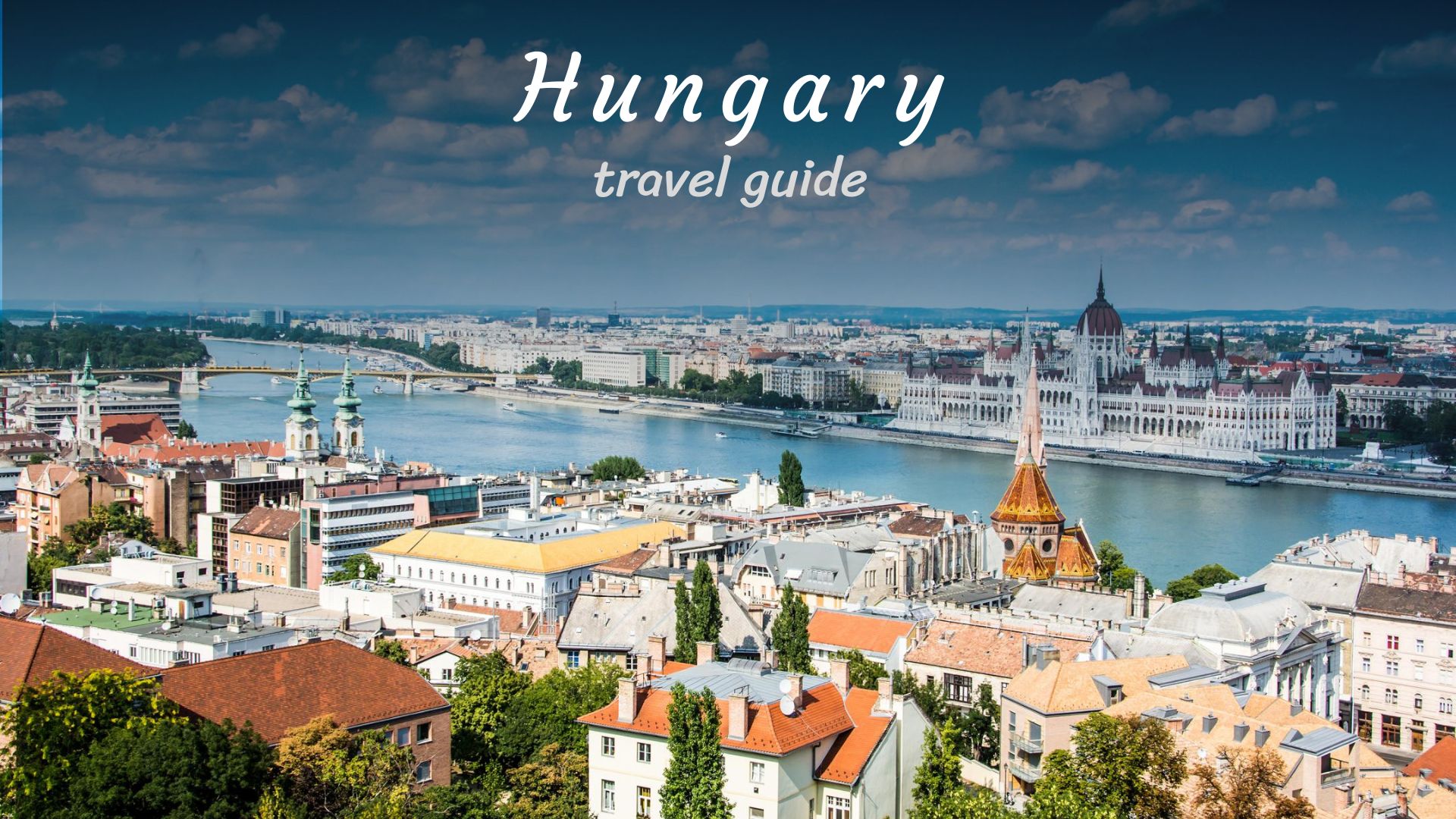
Hungary has many places of interest within its territory. Wonderful landscapes, charming people villages, unique monuments in the world, thermal and curative water spas and as we said some very special people. We start our trip through Budapest, the romanticism filters in the capital, and we continue through Dunakanyar.
Contents
Budapest
Hungary’s capital, Budapest, is actually a merger of two parties, Buda and Pest. Buda is the oldest and most mountainous area, while Pest is the flattest and most modern area.
Buda
The tour of the city usually begins with Buda, the oldest part and which welcomes the residence of numerous kings and emperors. At present, it has become the most expensive area of the city where there are residential neighborhoods. It is necessary to start from the hill of the Castle from where it is possible to appreciate the splendid beauty of the whole city and the clear division of the two parts: Buda and Pest, separated by the mystical Danube.
Entering the old port of Vienna, to the north, you can stroll through the streets around squares and streets to breathe the past history of the Austro-Hungarian Empire, as in Tancsis Mihály utca, Tárnok uca Uri utca, which are very beautiful. In the center of this district, in the Plaza de la Trinidad, the Church of San Matías, where several emperors of Hungary such as Sissi and Francisco José, among others, were crowned.

Of Romanesque style, built in the thirteenth century, rebuilt in the fourteenth and fifteenth centuries in Gothic style, to become in the second half of the fourteenth century, a mosque during the Ottoman Empire, and return to the Catholic faith after the reconquest in 1686. In the nineteenth century, it received its current architecture, the neo-gothic style. The dome is covered with different colored tiles, murals and avant-garde glazing and the royal and artistic treasures located in the southern portico stands out. If you get the chance, don’t miss the Friday afternoon concerts.
In front of the imposing standing church is Pescador Bat. Built at the end of the 19th century by Frigyes Schulek, this place looks like it was taken from a storybook. Its seven towers celebrate the seven Magyar tribes that founded Hungary in 896. It’s really a beautiful view of the Danube, the Parliament and the dome of St. Stephen, and if it’s night, it’s even more beautiful.
Nearby is the Hilton Budapest hotel, a modern building, in contrast to the ruins of a 13th-century abbey and a 16th-century Jesuit school, integrated into the structure of the building. Enjoy the summer terrace from two to take a refreshing drink.
Continuing from north to south, you reach the Royal Palace, the residence of Hungarian kings for centuries. Built-in the first century, but in XIII has suffered the occupation of the Tatars, Turks, and Nazis, at the end semi-destroyed during the Second World War. Its reconstruction was used to install inside a number of museums, including the Museum of History of Budapest, which makes it a fascinating journey through the history of the city, the National Gallery of Hungary, with works by Hungarian artists from the eleventh century to the present day and the Ludwig Collection.

After visiting the Palace enjoy a good coffee at the Café Ruszwurm simply admire the Monument of the Liberation of Kisfaludi-Strobl Zsigmond, which commemorates the liberation of Budapest from the Nazis in 1945. Very close to this monument is the Citadel, a fortress that rises 60 m., over the river and is often compared to a large stone gallery.
Before leaving Buda is usual to take the funicular that climbs to the Szabadság-hegy, where you can take a pleasant walk by the Pioneer Railway controlled entirely by children. It is very entertaining.
You can cross to the Pest area from Buda by public transport, but it is advisable to do so by walking the Chain Bridge, built between 1842-1847 by a Scotsman named Clark, who also designed Adam Clark Square, which takes its name. This square is a symbolic sculpture of Borsos Miklós, representing kilometer 0. The view from the bridge illuminated at night is fantastic.
Pest
This part of the city brings together the financial and commercial center of Budapest. It is a very active area because there are ministries, parliament, cinemas, shops, hotels and the main meeting places of the people in the village. The center of Pest is pedestrian and is located between Váci street and Vörösmarty tér square.
If you want to go shopping in the right place, you will find from typical Hungarian souvenir shops to elegant boutiques at high prices. In addition to the shops, Pest has many attractions.
To the north stands the Parliament, a beautifully constructed neo-Gothic building, especially at dusk, when the lights are reflected on the Danube.

Crossing the Margit hid, one arrives at the island of Margarita. This island is a real natural backwater, considered a public pedestrian park, equipped with restaurants, hotels, cafes and the smell of thermal waters. You can take a bike ride, as well as other fun attractions. It’s ideal for a quiet day.
Returning to Andrássy Avenue in Pest you can enjoy one of the most beautiful routes in the city. It starts at St. Stephen’s Basilica, Budapest’s largest church, with a capacity of 8,000 people and ends at Heroes Square, where the Millennial Monument stands. This monument was built to commemorate the national leaders and heroes of the last 1,000 years. The architectural composition consists of a column of 36 m., sculptures and a large slab, the emblem of the tomb of the Unknown Soldier, guarded by soldiers. Try to see the change of guard, it is very singular.
In this square is also the Museum of Fine Arts with a stupendous collection of Spanish paintings and other works by Flemish and Italian artists, highlighting the collection of European designs. The Art Gallery offers temporary exhibitions of national and international artists.
Behind this square is the preferred meeting place of the inhabitants of Budapest, the Municipal Park of Varosliget, where there are museums, restaurants and the main attraction, the Castle of Vajdahunyad. This environment also has a beautiful lake where you can sail rowing boats, in a permanent circus and amusement park to the delight of the little ones, in addition to the Széchenyi Baths, where you can play chess while showering. Also on Andrássy Avenue is the Opera, an Italian neo-renaissance building, whose interior can be visited.

In the National Museum, you can admire the royal jewels that the Nazis wore after leaving Hungary and that the United States returned to the country in 1978. The crown, scepter, and orb of the Hungarian monarchs stand out.
The Jewish quarter is very beautiful. It still preserves the traces of the Second World War left on the buildings. In the center of this neighborhood is the Synagogue (the largest in Europe), the medieval Jewish Tabernacle, very impressive and the Jewish Museum, which tells the story of Jews in Hungary.
Other places of interest in Pest is the West station built-in 1870, by the same company that built the Eiffel Tower in Paris and Vörösmarty Square, where street artists and young Hungarians come together.

Both Buda and Pest can take thermal baths in a charming environment. The changing rooms are impressive and many are located in warm water places with healing effects. Of special fame Gellért hotel with excellent facilities in a building of Art Nouveau style. It has several buildings connected by gardens that are found in pools, hot tubs, and thermal cubes. This hotel resort has 13 swimming pools, whose temperature oscillates between 27 and 48 degrees. It also has an indoor pool with columns and balconies and a baroque glass roof that can be opened on sunny days.
If you don’t want to take a bath you can enjoy the surroundings over a cup of coffee.
Other very appreciated spas are those built by Mustafa Pasha, in the sixteenth century and that stand out for the beautiful dome and its eight fountains, the elements mix Turkish Király styles with neo-classical and baroque. Specialized in degenerative arthritis, the Száchenyi is a building built in stone and bronze, with a beautiful garden.
Almost as well known as spas are the city’s cafes. The Gerbeaude was inaugurated in 1858 and is famous for its Dobos cakes which are its specialty. Ruszwurm has been baking delicious cakes since 1827 and Angelika has 19th-century salons.
The most famous restaurant is the Budapest Gundel, opened more than a century ago, is a meeting place for politicians and artists. You can eat excellent Hungarian cuisine while enjoying popular performances.
If you want to enjoy a good show, be sure to see a concert by the city’s Philharmonic Orchestra, a performance by the Győr Ballet Company or the Margarita Island Theatre in the open air. You can also enjoy the city’s seven casinos, such as the Várkert Budapest Casino. In addition, you will have a great variety of discotheques and clubs to have a drink at night.
Dunakanyar
Known as the “Return of the Danube”, Dunakanyar is located forty kilometers from Budapest, to the north. The landscape of this area is very beautiful, as the Danube flows between gentle hills full of green areas and numerous charming villages such as Szentendre, Visegrád and Esztergom, among others. These villages can be reached by river from the Hungarian capital, in a very pleasant cruise, with stops at places of interest. It is advisable to buy the tickets one day in advance.
Szentendre is located in the foothills of the Visegrád. Founded in the 18th century by Serbs who fled their homeland from Turkish domination, today it is known for the mixture of two architectural styles: Serbian and Greek Orthodox, which gives great originality to the buildings. The best example is the Church of Blagovestenska located in Main Square.
This city has been the center of many artists whose works, over time, can be admired in the Gallery Kis, or in the Szentendre Painting Gallery at the Czóbel Museum, with an exhibition of works by these Hungarian impressionist painters and in the Cathedral Red Tower, which sets up an interesting exhibition of religious art and Greek Serbian Orthodox.
A few kilometers above Szentendre is located Visegrád. The most prominent place in this village is a stone fortress built by Béla IV with the intention of defending the people from the Mongol attack of the 13th century. This fortress was so safe that the monarchs of the house of Anjou installed their palace where they took refuge from further attacks. In the month of July, it is celebrated in recreation, which will make the spectator feel there as in the middle ages. The participants, both people, and horses wear period costumes for a more realistic effect.

After visiting Visegrád we can continue to Esztergom, known as the capital of medieval Hungary, with numerous monuments of great importance. There are the ruins of the Royal Palace of the Romanesque cathedral, the largest in the country and the center of the Hungarian Catholic Church, in whose Treasure Room is the coronation cross, with which Hungarian monarchs swore and the Christian Museum where we will see an interesting collection of Hungarian and Italian religious art. Be sure to take a stroll through the city’s markets, parks, and small restaurants.
Gyor was the bastion of Hungary’s defense against Turkish invasions. Situated between Budapest and Vienna, the city is currently the third-largest in terms of industry. Its appearance is due to reconstructions made between the thirteenth and nineteenth centuries.
The old town is pedestrianized and very well preserved. It begins the tour through the city built in the early twentieth century. Walkthrough charming alleys arrive at Széchenyi tér, former market square and Republic Square, where the Cathedral is located.
Don’t miss the Vaskakas tavern located in the dungeons of the 16th-century castle in Köztársaság tér, where you can taste excellent Hungarian food representative of the country.
Written by:


 Yuliya Yanukovich
 Artur Gurin