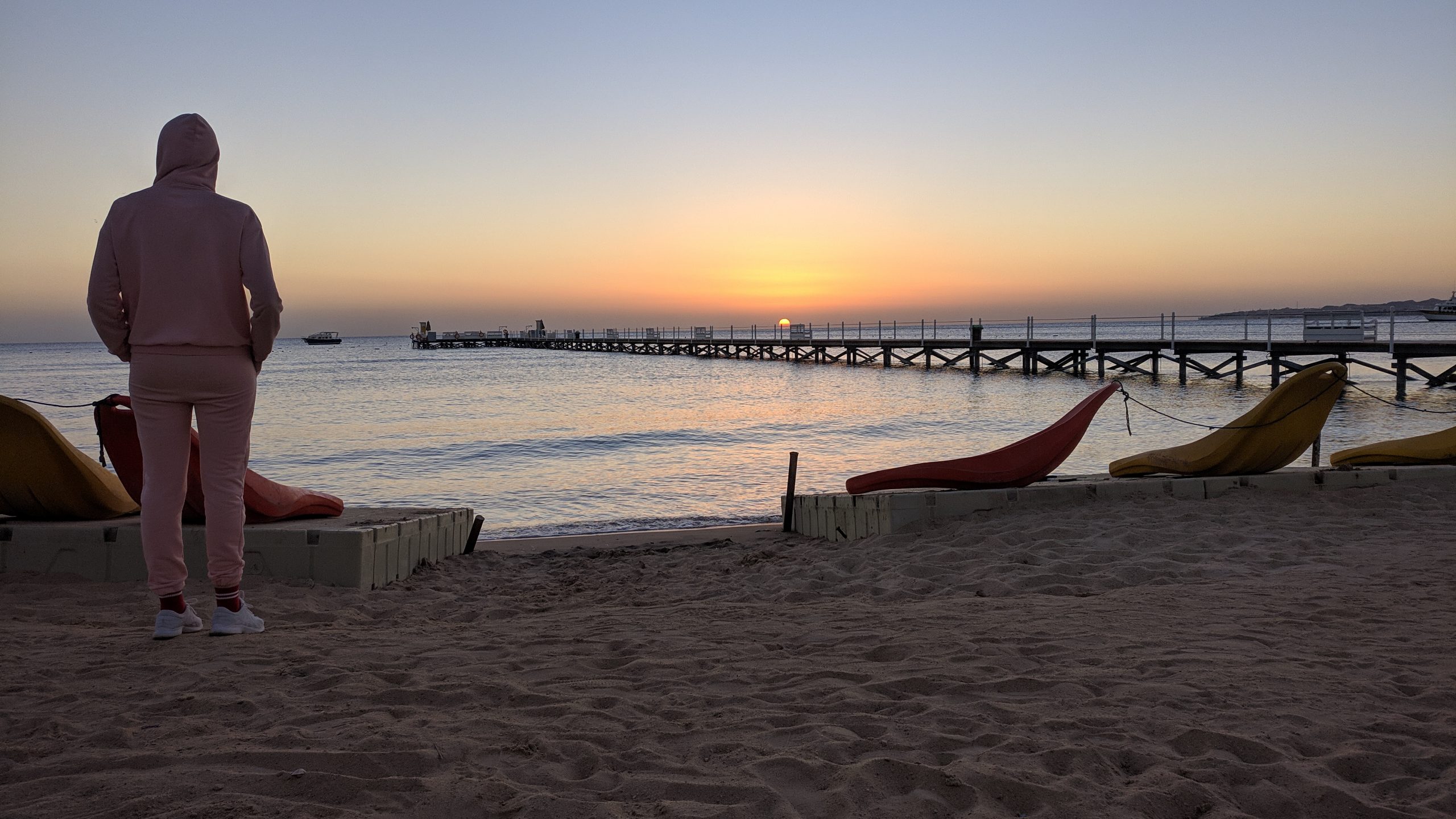
Egypt is not only “all-inclusive” and has pyramids on the palm of your hand. The Arab Republic, nestled on two continents, is able to surprise not only with architectural classics. In our 10 tips and tricks, we tell you what you need to know to spend your trip on a high, to stock up on goodies at ridiculous prices, and not to become a victim of a “scam.”
Contents
You can go without hijab
The fact that Egypt is a resort country does not cancel its conservative principles. No matter how stifling the heat is, girls prefer a closed version of the outfit (light dresses or skirts below the knees and sweatshirts up to the elbow will not embarrass anyone). The attitude toward men here is more loyal—even if you are in shorts, no one will make a remark. But jeans or pants are still preferable.
Money, money, money
Egypt has its own currency—the Egyptian pound (which is equal to $0.05-0.06). However, both dollars and euros are in circulation. If you want to withdraw cash from a card, know that ATMs issue only local pounds. And what remains on your hands from Egyptian pounds, you will not be allowed to take out of the country—such laws (at the airport even shoes will be checked).

Run, Forrest, run!
If rules exist to be broken, it’s definitely about Egyptian traffic laws. Here, drivers storm the roadway to their liking (or mood?); there are no crosswalks or traffic lights as such (and if you do find one, it doesn’t give you any guarantees). Get ready for the fact that you will have to actively turn your head around and move your feet very, VERY quickly. If in buses and subways prices are fixed, with cab drivers you need to bargain and agree on the final price before arriving at the place.

Translation difficulties
It would seem that the flow of tourists to the Red Sea is inexhaustible, but the locals with undisguised curiosity continue to look at European faces: smiling and pointing fingers, and may stealthily take pictures. The streets are full of children asking for baksheesh (alms). Keep your wallet with you—during the whole trip, the crowd of those eager for your “un dollar” will not thin, believe me.
As a rule, Egyptians are friendly to their guests and will gladly give directions or advice. English is in use, and many know Russian. And local men will give a head start to any guru of seduction in the skill of compliments. Ladies, get ready! No one will be left without a dose of eloquence.

Paradise in a hut
AirBnb and Booking will help you find an affordable roof over your head. You can catch the notorious “all-inclusive” in a 4-star hotel by the sea for about $20-25 for a double room. There are also options for $10-15, but without food and other embellishments. It is customary to leave a tip for cleaning the room—usually $1. Valuable things are best kept in a safe, which is almost always available in the room.

Bon appétit
You can dine at an inexpensive restaurant for $3-5 per person. There are even cheaper places to eat—if you are lucky enough to stumble upon a local cafeteria, you can eat for $1-3. In grocery stores and supermarkets, there is also a great chance to buy inexpensive food: for example, the price for a loaf of bread and a liter of juice rarely exceeds $0.5. At the market, you can buy the freshest and strangest fruits for us at an obscenely cheap price. So, a kilogram of mangoes (figs, strawberries, pomegranates, and guavas) will cost less than a dollar! It is always sunny in Egypt; the land near the Nile is fertile all year round, which is why there are always fresh herbs at surprisingly low prices.
One more peculiarity—if you ask the seller how much the goods cost, you will not be able to just walk away: bargain; otherwise, the locals do not understand why you show interest in their goods. Asking means you want to buy, and that’s the only way.

To drink or not to drink?
You can wash your hands and shower under tap water, but never drink or brush your teeth (otherwise, your Arabian trip could turn into a sad trip with gastrointestinal distress)! The waters of the Red Sea will be saltier than any dried wobla, so the water is desalinated, but it’s still unsuitable for drinking. Hotels usually refill your mini-bar with bottled water. But in case of emergency, be sure to pack everything you need in your first aid kit—for stomach problems, colds, and injuries (it will definitely not be superfluous).
As for alcohol, in Egypt you will have to sweat a lot before you find a bottle or two of the cherished fiery liquid: in Islam, alcohol is, to put it mildly, not welcome. It is cheaper and tastier to buy in Duty Free at the border.

History at arm’s length
To come to the birthplace of the pharaohs and not dig into history is a bad thing in the eyes of the locals. To look at the columns of the Karnak temple in Luxor, to express sympathy for the absence of a nose at the immense Sphinx in Giza, to feel yourself a grain of sand in comparison with ancient architecture—here and the stuffiness, and a long way in the bus will be tolerated. If you fly on a ticket, you should know that excursions from your tour operator are at least two times more expensive than if you take them from an Egyptian guide. If you want to save money, keep the resources for finding a guide in place needguide.co.uk, toursbylocals.com, and showaround.com.
Besides architectural heritage, Egypt has a lot more to offer: near Hurghada there is a Venice called El Gouna, there is diving and diving on coral reefs (here you should remember that a huge fine is inevitable for the catch of coral and shells); a motorized safari; and much more. But get ready for unforeseen expenses: the guide can include another item in the program of the excursion for a fee. If you want to go there, you can knock down the price (it is not uncommon for tourists to buy the same tour package at a different price). If you don’t want unplanned adventures, you’ll have to wait on the bus.
Also know that elders in robes up to their heels, literally hovering over the cultural and architectural heritage like children from the streets, are hoping for your “one dollar”. A respectful-looking man will gladly take a picture with you but will also immediately ask for a reward for his short-term modeling career.

Faith is paramount
In Egypt, about 90% of believers are Muslims, and the remaining 10% identify themselves as Christians. There are no special problems with getting into a mosque or temple. Before entering the mosque, a girl is necessarily given an analog of a hijab, but in fact, you can pass in an extended dress—only shoes will have to be left at the entrance. And no one forbids you to take photos or videos.
Temples do not look like typical Orthodox temples—the temple in Hurghada from the outside looks more like something cosmic. Inside, the decoration is similar to the church—the same benches, huge stained-glass windows, and an urn for alms. It is also possible to take photos.
Just what you need
To give your friends and family memorable trinkets, it is better to avoid the big shopping centers. The locals consider Europeans rich by default, so things are sold at a premium. The same products will be cheaper in small stores.
What you should really take home with you are medicinal oils and perfumes (in Egypt, they are made of essential oils—nothing superfluous, and the persistence is the envy of any famous brand). It is better not to take oils and perfumes from hands and to buy only in stores (it will be normal to ask for a certificate of quality and a receipt for demonstration from the seller so that there will be no questions at the airport inspection). You can and should bargain for perfumes and oils! And a box of delicious rahat-lukum or nougat with nuts will take you away for only $1.5-2.
As for the usual little things like figurines and magnets, you should also go to small shops for them. In a large shopping center a figurine of a representative of the royal dynasty will cost $10, and from hand, you will take 3 pieces for $1.

Written by:


 Yuliya Yanukovich
 Artur Gurin




Great article! I really appreciate the clear and detailed insights you’ve provided on this topic. It’s always refreshing to read content that breaks things down so well, making it easy for readers to grasp even complex ideas. I also found the practical tips you’ve shared to be very helpful. Looking forward to more informative posts like this! Keep up the good work!
Thank you, that’s the best reward for us:)